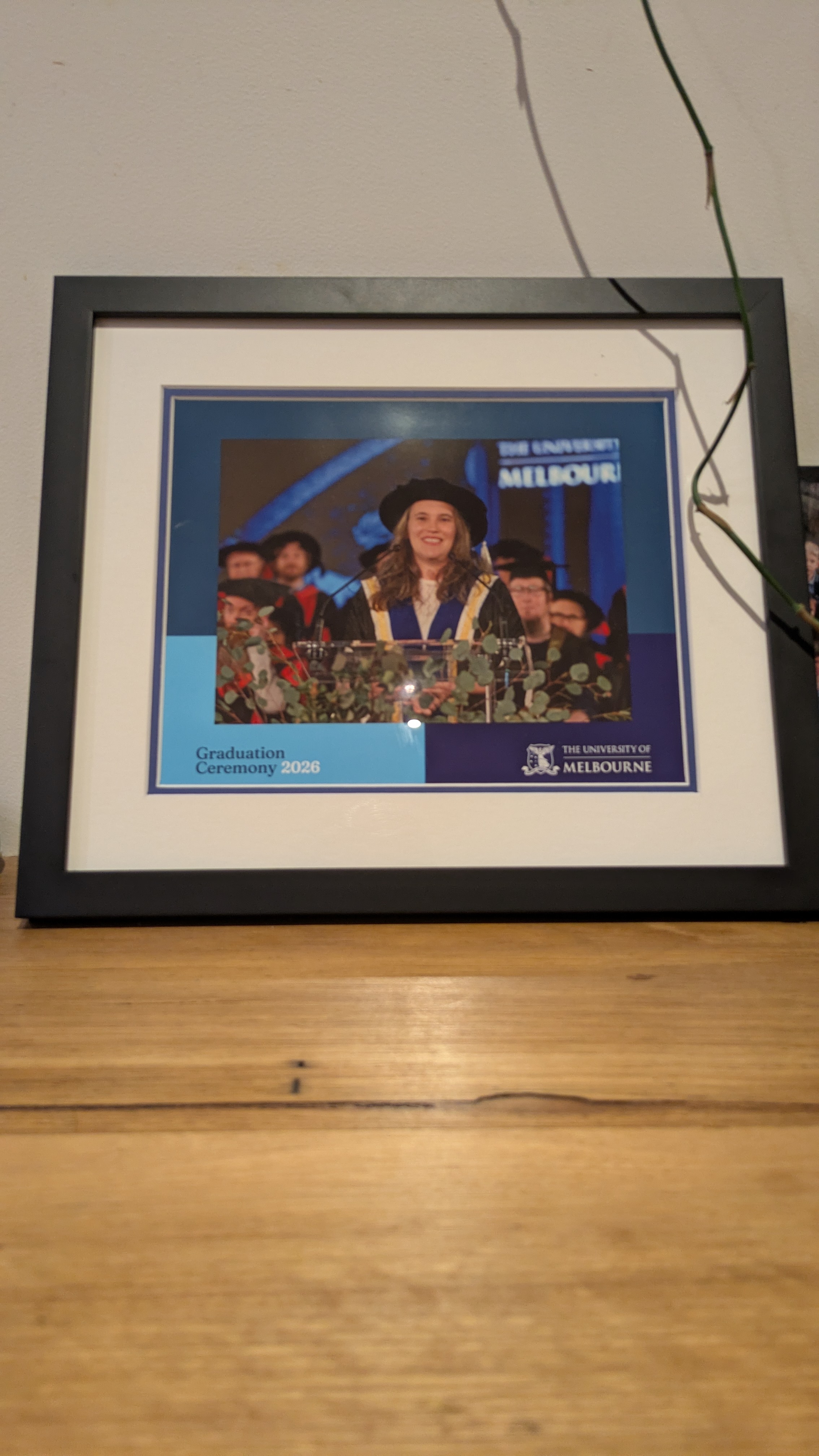
I was honoured to give the Occasional Address at a Faculty of Science Graduation ceremony earlier this month. Big robes, big chair, the whole thing.
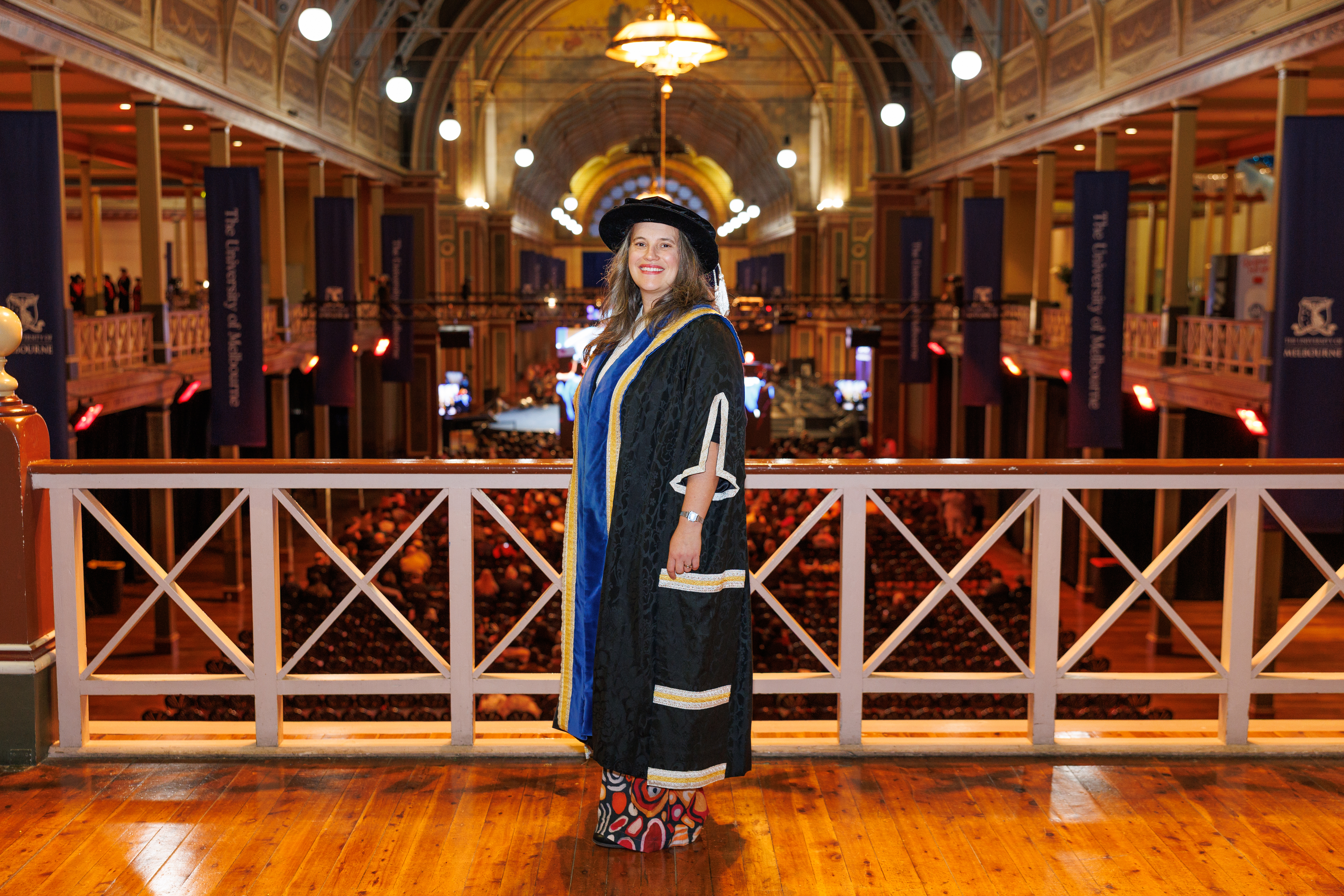
Given the ceremony occurred on Census night, I thought it only fitting to lean into the data theme. Here’s my speech, if you’re interested in seeing how I can weave population statistics into (hopefully) useful advice for our next generation.
Good evening, everyone. Chancellor, Academic Board Officer, Dean, and most importantly, our new graduates, and their friends and family. It is an honour to be with you tonight.
I would also like to acknowledge the traditional custodians of this land, the Wurundjeri people of the Kulin nation. I pay my respect to elders, past, present and emerging, and extend my respect to all First Nations people here today, particularly our First Nations graduates.
Indigenous Australians are our first educators, scientists, and keepers of ceremony. We are so lucky to live and learn in a place that has been cared for for hundreds of generations, by a people with such powerful methods of educating that Australia is home to the oldest living culture on Earth.
Tonight is a celebration of hard work and achievements — not only of our amazing graduates, but their loyal and patient support crew.
What a testament to your dedication that you are all here, instead of at home, revelling in the wild celebration that is Australian Census night!
Every 5 years people in Australia complete a glorious form, and provide sweet, delicious data for the Bureau of Statistics.
As many of you are graduating scientists, I don’t have to tell you of the immense value of data. The information collected tonight will reveal who we are as a nation, and address some big questions.
How has Australia’s population changed? Who needs better representation? What big questions need to be answered next?
This national snapshot can also make you think about the past. Where were you 5 years ago?
Many of you were probably living elsewhere – a different town, state, or country.
Perhaps you were already at The University of Melbourne, or maybe you were slogging through your final year of high school, disrupted as it was by the pandemic.
Regardless of where you were, please do yourself the service of being a bit impressed for getting it done. Completing a degree at any time is no easy task, and the past 5 years have thrown plenty of challenges at all of us. So well done.
For me, one census ago, I was home with a young child, blissfully under the median age of the Australian population. This time, I’m afraid I will be over that number.
10 years, or two censuses ago, I was technically homeless and jobless, having just returned from a research position in Spain.
The census before that, I was knee-deep in my PhD, thinking the day you are having right now would never happen for me.
But thankfully it did, and my education in physics, maths, climate science and communication has allowed me to have many grand adventures: from Europe, to regional Australia, from dusty attics to bright TV studios.
While my career journey has not been linear, each job I’ve had taught me more about how our planet works, and how people work. And it’s the combination of the two that can make a real difference.
Science is vitally important, yes. Having a rigorous methodology, carefully collecting information and interrogating results are vital skills, particularly in a time when every post, fact, or even video needs to be validated as true.
But the skills of working and talking with other people are also crucial.
The world not only needs people who can think critically, but who can communicate clearly, who can engage with empathy, and who can connect multiple pieces of a puzzle together.
This is what you and your qualification brings to the world.
Perhaps you are asking where these skills will take you.
Only you can answer that question, but keeping with the theme of data, let me offer a couple of suggestions.
The first is to find the centre of your own Venn Diagram.
Climate action leader Ayana Elizabeth Johnston uses a ‘climate action venn diagram’ to help people figure out how they can best make positive change for the planet.
But the Venn Diagram is pretty good career advice too. What you want is the overlap between:
- what you are good at — and you’re good at lots of things
- what needs doing — and as you know, there are plenty of things that need to be done
- and what excites you.
If I could brazenly add a fourth circle, I would also suggest thinking about the kind of days you want. Do you like travelling? Working in a team? Being outside?
It’s worth thinking about this, because after all, what is a life but a collection of days.
You might be saying, I don’t know the answer to any of those things.
And that leads me to second suggestion. Don’t be afraid to experiment. Just like millions of people across the country tonight, use your next steps to provide data.
They say ‘life is what happens when you’re busy making other plans’. In my experience, ‘a career is what happens when you follow what’s interesting’. So take note of what lights you up. Reflect, refine, and experiment again.
Whether you know what is next, or whether you have more data to collect, tonight is a time to be proud of what you have accomplished so far.
The next experiment is just around the corner, and we can’t wait to see what the next 5, 10, 15 years and beyond hold for you.
A huge congratulations once again, to our graduates.

